

 See My Latest Article on HelloNation
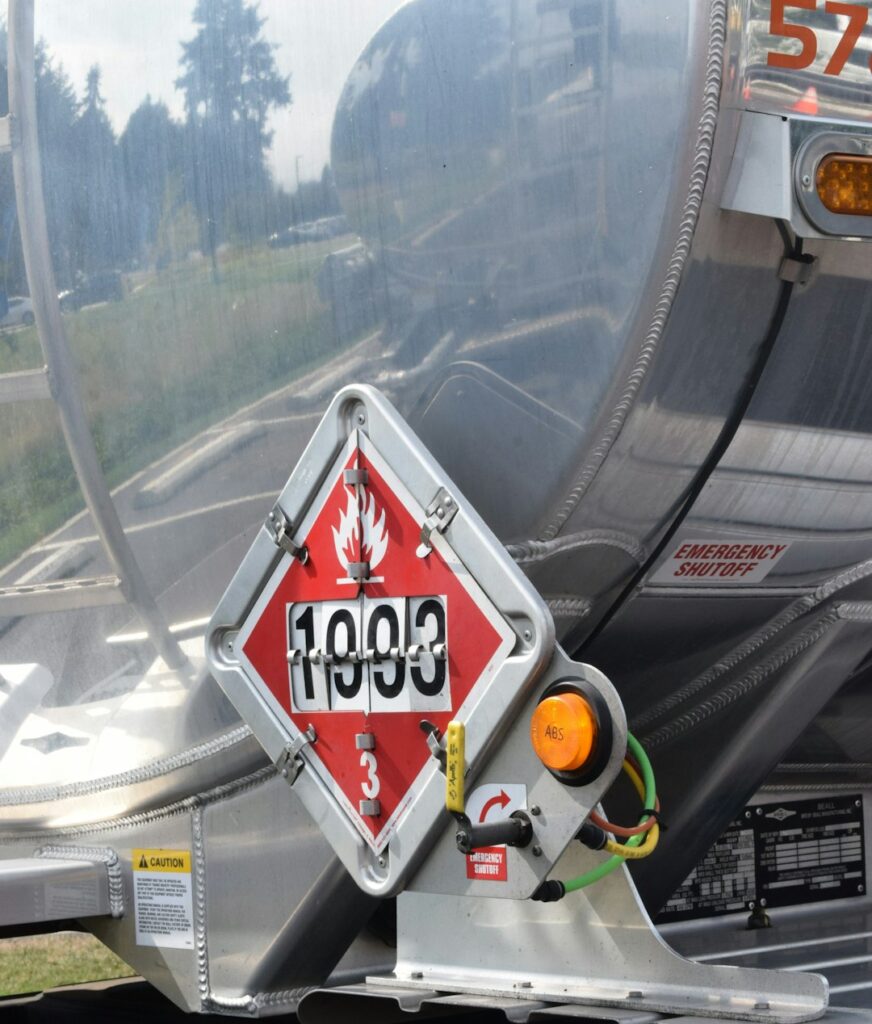
What makes hazmat trucking different from ordinary freight hauling?
Hazardous materials trucking requires controls that go beyond ordinary cargo transportation because a crash, leak, fire, or incorrect shipment can affect people, property, roadways, and the environment. Safety depends on several connected steps: identifying the material correctly, using the right packaging, securing the load, selecting a safe route, and preparing for emergencies.
Federal hazardous materials rules cover shipping papers, package markings, placards, loading procedures, emergency information, employee training, security, and incident reporting. The exact requirements depend on the material’s hazard class, quantity, container type, and transportation conditions. ([portal.phmsa.dot.gov](https://portal.phmsa.dot.gov/ocfrTool/cfr?utm_source=openai))
For residents, the most visible signs are placards on tanker trucks, warning labels on packages, and emergency instructions carried in the vehicle. These are not merely administrative details. They help drivers, inspectors, firefighters, and other responders understand what may be present before approaching a vehicle.
How are hazardous loads identified and documented?
Correct identification is the foundation of hazmat safety. Before a vehicle moves, the shipper and carrier must determine the material’s proper shipping name, hazard class, identification number, packing group when applicable, quantity, and packaging requirements.
The shipment must also have accurate shipping papers and emergency response information. These documents help responders determine whether a substance is flammable, corrosive, toxic, radioactive, reactive, or dangerous when exposed to water.
Common safeguards include:
- Checking the material against the federal Hazardous Materials Table.
- Confirming that the package or tank is authorized for that substance.
- Inspecting labels, markings, and placards for accuracy and visibility.
- Keeping shipping papers accessible to the driver.
- Providing a 24-hour emergency response telephone number when required.
- Verifying that the paperwork matches the actual load.
A mismatch between a placard and the material being carried can delay protective decisions during a crash. That is why documentation is treated as a safety control rather than routine paperwork.
Why are inspections and load securement so important?
A truck carrying hazardous material must be inspected before travel and during the trip. The driver or other qualified personnel look for conditions that could lead to a release, including damaged valves, loose fittings, leaking packages, worn tires, defective lights, or problems with the trailer and cargo tank.
Load securement is equally important. Containers must be positioned and restrained so they do not shift, fall, rupture, or interfere with vehicle control. Incompatible materials may need separation, and loading procedures must account for the material’s physical and chemical properties.
Bulk tankers require special attention because liquid movement can affect braking and handling. A partially loaded tank may behave differently from a fully loaded one, particularly during sudden stops, curves, or wet-road conditions.
Residents may notice slower speeds, wider turns, or greater following distances around hazmat vehicles. Those driving practices are often deliberate. They reduce the chance that abrupt maneuvering will damage the vehicle or destabilize the load.
What training must hazmat employees receive?
Hazmat employees include more than drivers. The term can include people who prepare shipments, load or unload containers, inspect packages, operate vehicles, or make transportation safety decisions.
Federal requirements call for a systematic training program that includes:
- General awareness and familiarity with hazmat rules.
- Function-specific instruction for the employee’s assigned duties.
- Safety training covering accident prevention and emergency procedures.
- Security awareness training.
- In-depth security training when a security plan applies.
Required training generally must be completed within 90 days for a new employee or someone changing functions, with direct supervision permitted during the training period. Recurrent training is required at least once every three years, and additional instruction may be needed when regulations or job duties change. ([phmsa.dot.gov](https://www.phmsa.dot.gov/about-phmsa/hazardous-materials-training-requirements?utm_source=openai))
Good training also teaches employees what not to do. A driver should not attempt an improvised repair on a leaking tank, enter a contaminated area without proper protection, or rely on memory when emergency information is available.
How does route planning reduce risk?
Route planning is more than choosing the shortest distance. Carriers may consider road conditions, bridge limits, steep grades, construction, traffic density, weather, restricted areas, and locations where stopping may be unavoidable.
Some hazardous materials and quantities are subject to additional permit, routing, or security requirements. Certain carriers must participate in the federal Hazardous Materials Safety Permit Program, which requires qualifying operations to maintain specified safety programs. ([fmcsa.dot.gov](https://www.fmcsa.dot.gov/regulations/hazardous-materials/hazardous-materials-safety-permit-program-hmsp?utm_source=openai))
In a community with a mix of residential streets, commercial corridors, older infrastructure, and changing seasonal weather, route decisions can affect both roadway safety and emergency access. Rain, ice, reduced visibility, and standing water can increase stopping distances and make a minor problem more difficult to manage.
Route planning also includes communication. Dispatchers and drivers may need procedures for unexpected road closures, severe weather, mechanical trouble, or a crash that blocks the planned path.
What security measures protect hazardous loads?
Safety and security overlap but are not identical. Safety focuses on preventing accidental harm; security focuses on preventing theft, tampering, unauthorized access, or intentional misuse.
All hazmat employees need security awareness training. Shipments involving certain highly hazardous materials may also require a written security plan addressing personnel security, unauthorized access, and en-route security. ([phmsa.dot.gov](https://www.phmsa.dot.gov/regulations/federal-register-documents/03-7080?utm_source=openai))

Practical security measures may include:
- Limiting access to shipping information and vehicles.
- Checking that loading and unloading areas are controlled.
- Securing vehicles when unattended.
- Reporting suspicious activity or attempted tampering.
- Planning stops carefully instead of leaving a loaded vehicle in an unsuitable location.
- Maintaining communication during the trip.
Security procedures should be detailed enough to protect the shipment without publicly exposing sensitive routing or cargo information.
What should residents do after a hazmat truck crash or spill?
Residents should treat an unknown spill as hazardous until emergency responders identify it. Do not touch the material, walk through a vapor cloud, approach a damaged tank, or attempt to move containers.
The Illinois emergency preparedness guidance recommends calling 9-1-1, staying uphill and upwind when possible, and keeping away from the incident area. Some substances may be difficult to see or smell, so a lack of obvious warning does not mean the area is safe. ([ready.illinois.gov](https://ready.illinois.gov/hazards/hazardousmaterials.html?utm_source=openai))
If a truck is involved in a collision:
- Move away from the roadway and follow instructions from emergency personnel.
- Avoid creating ignition sources near a possible flammable release.
- Do not stop nearby to observe or record the incident.
- Keep children and pets away from runoff, debris, and containers.
- Close windows and doors if directed to shelter indoors.
- Do not re-enter an evacuated area until officials give permission.
Transportation-related incidents should be reported through 9-1-1. State emergency and environmental agencies may become involved when a release threatens public health, land, air, or water. ([epa.illinois.gov](https://epa.illinois.gov/topics/emergency-response.html?utm_source=openai))
Why does emergency information matter during the first minutes?
The first minutes after a crash are often the most uncertain. Responders need to know what material is present, how much may have been released, whether fire or explosion hazards exist, and what protective distance may be appropriate.
The U.S. Department of Transportation’s Emergency Response Guidebook is designed to help responders manage transportation incidents during the critical early period before more detailed information is available. ([fmcsa.dot.gov](https://www.fmcsa.dot.gov/regulations/hazardous-materials/hazardous-materials-emergency-response-guidebook?utm_source=openai))
The safest public response is therefore simple: create distance, move upwind or uphill when feasible, call 9-1-1, and provide clear observations without approaching the vehicle. Hazmat trucking safety relies on preparation long before a truck reaches local roads, but informed decisions by nearby residents can also reduce exposure during an emergency.